[00:00:06] From the natural state.
[00:00:08] This is Public Facing, the podcast Foreign hello and good day to each of you across all your respective time zones. Would you pull up a chair and, you know, have a seat with it?
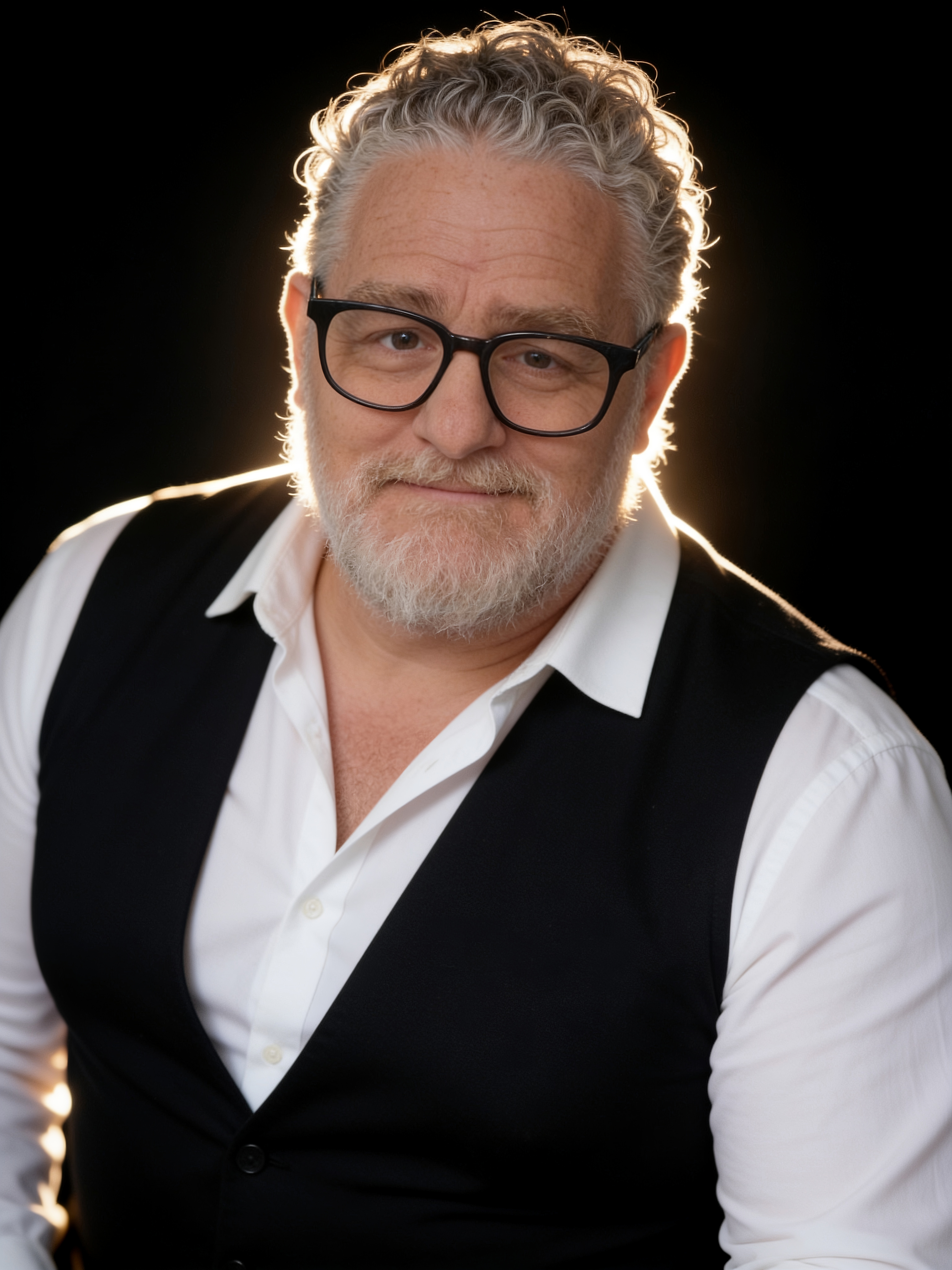
[00:00:46] I'm your host, Joel Holman. So allow me to welcome you to Public Facing, the podcast, where culture and community meet, sharing everyday voices and extraordinary stories, because that's what we do now. This is the talk show that dives into the true stories with the voices and the issues that are shaping our world.
[00:01:10] We openly welcome the conversations, testimonies, and personal stories, and we bring the conversations that matter straight to you, because the stories that impact the public should always be public facing.
[00:01:29] Well, I'm so glad that you're here today.
[00:01:32] Just want to kind of set the mood here, so let's kind of get to this.
[00:01:41] Now.
[00:01:44] Our episodes are that scripted yet unscripted talk show just. Again, welcome to the podcast. I am. I'm very happy that you're here today. That's awesome.
[00:02:00] Regardless of what you might hear during our time together, my hope is that you can find truth and hope inside the stories that we share.
[00:02:12] So let me. Let me ask you, and I know I'm getting a little personal right away, but how are you doing right now?
[00:02:21] See, I know we've got a lot going on in this great nation.
[00:02:26] We have a Democratic Congress that has essentially pitched a huge fit and refuses to budge until their demands are met, like some terrorist group.
[00:02:39] But by all accounts, the GOP side is holding fast to the values of smaller government and less government spending on things that are not conducive to the stability and the growth of our nation.
[00:02:55] It is a tipping contest for sure. And that regardless of how it all plays out, the American people, you, me, all of us, we're going to feel the brunt of those decisions.
[00:03:09] So I am. I'm just curious, how are you being affected with this shutdown?
[00:03:15] Have you felt the impact yet?
[00:03:18] If you have, tell me how you know, because how is your community being affected?
[00:03:25] How has the.
[00:03:27] I mean, what's. What's had to happen to make this thing impact your life?
[00:03:33] How have you been able to put down some space, you know, between yourself and the consequences of this shutdown?
[00:03:45] Now, I do. I know that I'm asking, like, a whole lot of questions right now, right?
[00:03:54] Yet definitely thinking about, you know, the whole.
[00:04:01] All the pieces to the puzzle.
[00:04:03] Now, all I can do is bring you the stuff that is open and honest conversation and an opportunity to share your perspective on these matters.
[00:04:17] So join the conversation.
[00:04:19] Send me Your comments, Send those to HelloPublicfacingPod stream.
[00:04:29] So far, people on Social Security, SSI, those receiving SSDI, which is a disability insurance, they've all been able to keep receiving benefits.
[00:04:43] So where are many of the areas that are being negatively affected?
[00:04:51] You know, the shutdown, it's led to the temporary suspension or reduction of various non essential federal services and employees. And the furlough of those employees equals about 40% of the federal workforce, which is about 750,000 employees who are placed on unpaid leave at the moment.
[00:05:17] Some areas also though, include national parks.
[00:05:22] And at the national parks, that includes their visitor centers, it includes their restrooms, it includes trash collection and even emergency services.
[00:05:34] All of these are either limited availability or none at all.
[00:05:40] Now if anyone is needing to apply for or make a payment for any type of a license that you have to obtain through the federal government, you know, those are all, those are all received through the Federal Communications Commission.
[00:06:04] They handle things like, for broadband, for television, radio, including commercial radio, even types of licensures such as for amateur radio, which is the same as ham radio.
[00:06:20] This is also called GMRS radio, that's general mobile radio service and other types, such as business types and more. You know, all of these are out of reach.
[00:06:36] Until the federal government opens up again, our essential workers, including the active duty men and women of our military, are continuing to work to protect and to defend our nation as well as its personnel and its assets abroad.
[00:06:55] Now, any lapse rather in payroll will be collected upon reopening the government.
[00:07:04] At least that was the statement that was made when this whole thing got started. Now there seems to be some question as to who of, of the furloughed employees will be eligible or won't be eligible for back pay. So we're, we're going to have to see how that goes.
[00:07:25] But the Supplemental Nutrition Assistance Program, or snap, is continuing funding for now. It's funded through carryover balances, but it's a continuation. Really depends on the availability of funding.
[00:07:47] Now Women Infants and Children, known as wic, is expected to run out of money very quickly, potentially halting food provisions to families should this shutdown become prolonged.
[00:08:03] Now overall, you know, the, the positives that I can find to share and trust me, I had to dig hard and deep, is that there will be guaranteed back pay for federal workers due to a law passed after the 2018, 2019 shutdown. And it ensures that both furloughed and essential employees will automatically receive back pay once funding resumes.
[00:08:35] So this has not always been the case. But now because of, you know, this law, you know it provides for financial security largely absent past shutdowns.
[00:08:52] Now, the whole thing can be unsettling to hear and I'm sure even worse to live out.
[00:08:58] But if you're in a position where you need help, I want to encourage you to reach out to local and state agencies to find assistance and alternative options for the solution.
[00:09:14] Don't go it alone because it's unnecessary.
[00:09:19] Let's face it, you don't have to.
[00:09:24] I want to turn now to kind of a brighter spot. You know, I.
[00:09:34] I wanted to share with you about a gumbo cook who worried about a regular customer's no show and ultimately saves his life.
[00:09:43] In Louisiana, a gumbo vendor noticed one of his regular customers hadn't shown up for days.
[00:09:53] Concerned, he went to the man's home and found him unconscious due to a diabetic emergency.
[00:09:59] He called paramedics immediately, saving the man's life.
[00:10:04] The act of kindness went viral, highlighting the power of community awareness and human connection.
[00:10:13] The customer has since recovered and reunited with the cook.
[00:10:18] He knew that something had to be wrong.
[00:10:21] See, for a decade, his routine was as reliable as the sunrise. Every day around 11 o', clock, the door of the Shrimp Basket in Pensacola, Florida would swing open and one loyal customer would walk in.
[00:10:38] Donnell Stallworth, a cook at the Shrimp Basket, said the regular visitor is like everybody's grandpa.
[00:10:47] They liked him so much that a few months ago, the staff threw him a birthday party as he celebrated his 78th birthday.
[00:10:56] How about that?
[00:10:58] Now every day the old man orders a cup of gumbo before heading home again.
[00:11:06] But earlier this month, the man stopped showing up.
[00:11:11] As the days mounted, concern spread among Donnell and the staff.
[00:11:17] Where was he?
[00:11:19] Donell had determined to find out because by this point, the old guy was something more than the customer. He was a friend.
[00:11:28] The report is as such, I just left work, went to his house and I knocked on the door like two times.
[00:11:37] He told Wear TV channel 3 news in the video that I'll send a link to here in a minute. You know, the third time I knocked on it, I kind of stayed up for up there for a minute and I knocked again and I heard him. Like hell.
[00:11:57] Who is it?
[00:11:59] When he heard was Donnell. The man, who wasn't named for medical privacy reasons, invited them in.
[00:12:08] He was sprawled on the floor where he had been laying for days after falling.
[00:12:15] His body was badly bruised with multiple broken ribs, according to the news report.
[00:12:21] He knows how long he would have been there and continue to lie there. Had no one else noticed he was missing that daily cup of gumbo, and a cook who cared likely saved his life.
[00:12:40] He was in tears, like, I don't even know how long I've been here, donell recalled.
[00:12:47] Paramedics arrive soon after, and the senior is now on the mend, working his way back to health with a steady diet of rehab and a cup of gumbo delivered every few days by the kind chef.
[00:13:01] But the staff is hoping that soon the shrimp basket's door will swing open again at about 11 o' clock and all smiles would be on both sides of the counter and it would stretch a little bit wider, with the gumbo tasting sweeter than ever before.
[00:13:21] Not all heroes wear capes.
[00:13:24] For more information, locate wear ABC, Channel 3.
[00:13:31] They have the full story, including an interview that you can post. You'll find the link to the post rather on our X account, which is x.compublic facing pod on our list of posts.
[00:13:51] Now our next story comes from Minnesota that the St. Paul Friends School Conflict Resolution Program inspires national attention Minnesota School Solution to Student Conflict Stop everything and Talk it Out Students Simone and Maya were having a conflict while in line for Spanish class. Maya pulled Simone's hair.
[00:14:22] Like a few times, simone said.
[00:14:25] So Simone and Maya sat with teacher Christina Talberg at a table in the hallway of their school to have a conflict resolution conference.
[00:14:35] These conflict conferences, excuse me, are an everyday occurrence at the Friends School.
[00:14:42] Small stations are set up in the halls where students can submit a written request for a mediated conference with their peers and sometimes their teachers if they have a disagreement.
[00:14:57] Carolyn Schneiders, who runs the school's conflict resolution program, said that the conferences are a big part of the school's culture, so kids don't hesitate to request them.
[00:15:11] She said that we basically stop everything if there's a conflict. We've got to resolve the conflict in order to learn, said Schneiders.
[00:15:21] We also have this daily system in place that allows it to happen without us having to rearrange anything or disrupt anything.
[00:15:30] And in the moment when politics is decisive and sometimes violent, these skills are essential for kids as they grow up, said Schneiders.
[00:15:44] That's one of the main takeaways, especially with our youngest kids when they first start doing the conferences, that not everybody thinks the same way and not everybody experiences the same things and that we have to sit down and listen to each other, she said.
[00:16:05] Before Simone and first grader Maya figured out how to solve their conflict, their teacher asked them to go over rules for their conversation.
[00:16:15] Don't talk over other people, said Simone.
[00:16:18] It's fine if you did it because you're not really in trouble.
[00:16:24] Be safe and respectful, added Maya.
[00:16:29] Conferences can extend to conflicts between students and teachers also, said Sarah Wayne, who is the assistant head of the school.
[00:16:39] I'll have a student that will sign up for a conference with their own teacher, which I have not seen practiced in any other school I've worked in or visited, she said.
[00:16:51] Wayne said it can be empowering for the child to have their voice heard.
[00:16:57] The idea is to have children be able to engage in conflict with anyone, she said. Talking through political disagreements Wayne said conflict resolution has been part of Friends School since it opened in the 80s.
[00:17:15] It's tied to the school's Quaker values like peace, community and belonging.
[00:17:22] From the moment kindergartners arrive on their first day of school, they're taught about how conflict resolution works.
[00:17:31] On an early September morning, the school's youngest children got an introduction to conflict resolution from their teachers and their fourth grade buddies who serve as mentors.
[00:17:46] Fourth grader Ellis explained to his kindergarten buddy why they had the conferences.
[00:17:53] Conferences are helpful when there's not a problem where someone is hurting you, but it's more like you have a disagreement, he said.
[00:18:01] And I feel like if it's not that important, then you can just try to figure it out with the person.
[00:18:08] In fact, Ellis said, he's having an easier time settling squabbles outside the school now.
[00:18:16] We don't really try to, like, blame people.
[00:18:19] We try to be like, I didn't like it when you did this.
[00:18:25] You want to understand what the other person's feelings are, he said.
[00:18:30] Margo Sullivan, a graduate of the Friends School in Minnesota, said that the skills she learned in grade school help her talk to other people who are more politically conservative than she is.
[00:18:43] Sullivan, a junior in high school, recalled talking to a conservative classmate who espoused the view that politicians should do more to promote marriage. Sullivan, whose parents have never been married, disagreed.
[00:19:00] Her initial instinct was to tell him he was wrong.
[00:19:04] Instead, she just let him talk. Things didn't escalate.
[00:19:11] I just wanted to hear what he had to say. I definitely don't think I would have done that if I hadn't had the experience of conferences and conferences, conference conflict resolution, she said.
[00:19:25] Now, Sullivan said that a big part of the conflict resolution process is letting the other person say their piece.
[00:19:35] You can't really understand someone else's opinions or views if you're trying to talk over them, she said.
[00:19:42] Back at the table where Simone and Maya convened a conference, Maya said she couldn't remember why she pulled Simone's hair, but she admitted that she did it and their resolution ended up being pretty simple.
[00:19:59] Maya, can you not pull my hair again? Simone asked.
[00:20:04] Maya readily agreed and the two of them headed back to class.
[00:20:08] Other schools and learning entities from around the country are also following suit.
[00:20:13] The consistent message across the board is come with a problem, leave with a plan.
[00:20:20] This story was originally written by Katherine Rickert of Minnesota Public Radio News.
[00:20:26] If you'd like to hear a story shared on air, send us your email at hellobublicfacingpod Stream.
[00:20:35] You're listening to Public Facing, the podcast where culture and community meet.
[00:20:44] So now kind of wanna slow things down a little bit. I wanna come Please sit with me. Just sit with me for a mid episode monologue.
[00:20:58] More of a commentary, but you know, that's all right.
[00:21:03] These just to you my dear listeners. You know our shows are created first and foremost for your benefit. More so for your benefit than for mine. But I will tell you, this is a labor of love.
[00:21:20] My biggest priority is to bring the information and to pass it out, but only after it suffices. My checklist and these are the bare minimums. But this is my checklist.
[00:21:38] Number one, the information must be true.
[00:21:44] Number two, the information must be accurate.
[00:21:49] And number three, the information is verifiable.
[00:21:55] Then, and only then, can I share with a clear conscience and a stamp of approval.
[00:22:03] Folks, we're living through some really tough and uncertain times.
[00:22:09] There are so many who have lost their health, their family, their jobs, their living space even, many of which have found themselves homeless, many without anything to eat to simply shout get a job.
[00:22:32] That's both insensitive and totally not helpful.
[00:22:38] I was raised, though, to treat people better than that and to help when able.
[00:22:47] I know that there are others out there like me.
[00:22:50] Sadly, I've already highlighted and shared what the other others are about.
[00:22:59] I do not have the magical solution that will rescue or reset everybody's circumstances. I just don't.
[00:23:07] But I can offer encouragement to you and direct you to look into assistance within organizations and agencies within your area.
[00:23:18] This country has a large number of employment opportunities available.
[00:23:25] Unfortunately, not everyone is in physical condition or skilled enough to do every single job or obtain reasonable employment that is within reach geographically.
[00:23:41] Some people, due to circumstances outside of their abilities and through choices they may have made, are ineligible for certain employment types due to legal charges or even a conviction or incarceration.
[00:23:58] Now let's flip that same coin, shall we?
[00:24:05] Maybe you've never caught a charge.
[00:24:10] Maybe the thing holding you back from really getting your foot in the door someplace is the lack of skills or the lack of training.
[00:24:19] And maybe the only thing holding you back is certifications.
[00:24:24] There are places that you might consider looking at for assistance.
[00:24:29] There are various employment services and job centers and vocational rehabilitation services who can, you know, help to get you where you're making your own way.
[00:24:43] There are even organizations that can help with help you produce or polish up a resume that'll position you better for that inevitable job interview.
[00:25:02] Search to see about these sources within your local area and within your state using some of these keywords that I've just kind of thrown out there to you.
[00:25:14] If you find that you received that training or you landed that job, I would love to hear about it. Shoot me a message at hello at Public Facing Pod Stream.
[00:25:32] I absolutely love to hear success stories, but I also love to hear progress reports.
[00:25:41] Public Facing the podcast is powered by Castos.
[00:25:46] Castos offers a number of tools to enhance your experience for you and your listeners about podcast hosting. Castos can help.
[00:25:57] Let's talk about it for those that are brand new to creating podcasts or you're on the fence whether you should start one.
[00:26:08] For instance, podcast hosting is just that. It's Castos providing a place to host your new podcast episode and to store the finished ones.
[00:26:23] It allows you also to build your episode from the title, the description, keywords, cover art, even the date that you want that episode published. That's the date that you want your listeners to be able to find the episode online while you're taking care of things upon completion.
[00:26:50] Castos helps get your podcast on many platforms, most without needing to lift an extra finger.
[00:26:58] Plus, if you really don't know what to do, the fine folks at Castos can help take get it out there. Take care of everything now, no matter your needs.
[00:27:13] Castos has a solution to fit your budget.
[00:27:16] Check them
[email protected] that's C-A-S-T-O S.com you'll be glad you did well folks, this is going to do it for today's episode. The Public Facing the podcast where culture and community meet.
[00:27:37] Remember, the stories that impact the public should always be public facing.
[00:27:47] If you enjoyed our time together, find us at Public Facing Pod Stream.
[00:27:54] Be sure to follow us and subscribe wherever you find your podcast and share the episode with someone today.
[00:28:02] Connect with us on
[email protected] public facing pod and send us your comments. Or even just say hello. Send that to hellobublicfacingpod Stream.
[00:28:21] Thanks for listening. And until next time. Sure. Those everyday voices and extraordinary stories keep things upright and public. Facing Sam.