[00:00:06] Um, from the natural state. This is Public Facing the Podcast.
[00:00:20] Welcome to all of you domestically in the USA and all around the world.
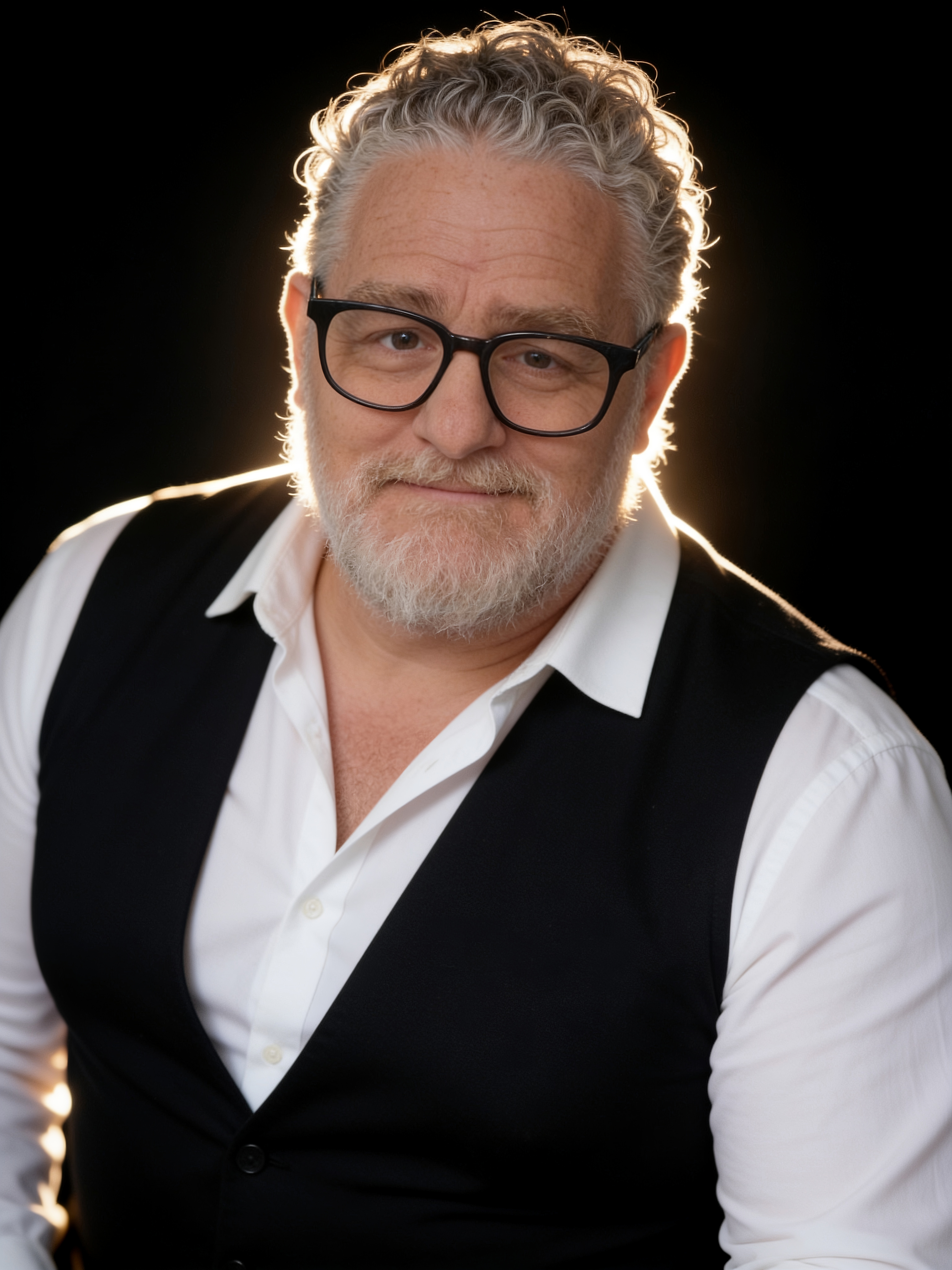
[00:00:26] For our time together, I will be your host, Joe Holman.
[00:00:29] Again, welcome to Public Facing the Podcast, where culture and community meet, sharing everyday voices and extraordinary stories.
[00:00:40] This is the talk show that deep dives into the true stories, sharing the everyday voices and shedding light on the positive issues that shape our world.
[00:00:55] We openly welcome the conversations, the testimonies and personal stories that impact the lives of so many from all locations and all walks of life.
[00:01:05] Because these stories should always be public facing, our episodes are that of a scripted yet unscripted talk show.
[00:01:16] Regardless of what you might hear shared during our time together, it is my hope, my sincere hope that you can find truth and hope inside the stories that we share.
[00:01:28] Not every story will hit quite the same as another, but every story will hit.
[00:01:35] Alright everyone, what's going on?
[00:01:39] How's your day going?
[00:01:41] How's your week shaping up for that matter?
[00:01:45] Are you, uh, are you keeping score?
[00:01:49] See, it's my hope that you're experiencing way more wins than losses.
[00:01:57] I think that when it comes to the life events and experiences that make up those W's and L's, that the columns we put them in are rather arbitrary and can at times also be interchangeable.
[00:02:11] So really, what do I mean by this?
[00:02:14] Alright, well, let's say a major life event has occurred.
[00:02:20] You've just lost your job that you loved of 12 years and you're devastated.
[00:02:28] Now you're asking yourself, how am I going to be able to pay rent or food or insurance or any other bills?
[00:02:37] So what do you do? You mope and you hope that something comes along fast, but really, there's no guarantees.
[00:02:45] Now, initially you might place this one in the column marked L, but life can work in mysterious ways.
[00:02:56] I say this because you never know what's coming.
[00:03:01] Maybe something better.
[00:03:04] This is one of those keep your fork moments.
[00:03:07] Now, I'll share a link to this inspirational story a little later in the broadcast.
[00:03:13] So back to my thought process, because sometimes it's the Ls that surprise us.
[00:03:21] You see, while some focus on the negatives, they may miss out on when the positive comes through.
[00:03:31] Okay, job loss, super hard. Yeah, I get it.
[00:03:36] But what happens then walks in an elderly mother who has been hospitalized and diagnosed with a dire medical condition that will for sure end up being fatal.
[00:03:53] This mother will require, uh, a living home health component now.
[00:04:00] But see, now you're out of work.
[00:04:03] Now you're able to devote the necessary time and energy to provide loving and quality care for your mother in home and full time. M time, it waits for no one.
[00:04:17] You know, as they say, time keeps on ticking, ticking, ticking into the future.
[00:04:25] Good old Steve Miller.
[00:04:28] Now you, the daughter, an only child, you've taken your mother in, you've cared for her and was able to spend high quality personal time for the final 10 months of her life.
[00:04:44] The time, the experiences and memories lived and shared were invaluable.
[00:04:52] See, we're calling this one a uh, win.
[00:04:55] And it wasn't even on their radar. Initially, we look for the silver lining, the positives, the blessings, the good in all that life has to offer.
[00:05:11] So since we've shared in this heartfelt scenario, I have to ask, what are some losses that you were able to reconcile and transfer to the wind column?
[00:05:25] See folks, not every cloud that passes over us produces rain.
[00:05:33] Sometimes it's some of those good and fluffy ones that bring us a bit of relief in the form of shade when the sun is a real scorcher.
[00:05:46] So take the win and game on.
[00:05:50] But maybe don't be so quick to keep score.
[00:05:54] I welcome your feedback, all of it, on the topics that we discuss and share here on Public Facing the podcast.
[00:06:03] An open door policy is in effect.
[00:06:06] You've heard my voice, now let me hear yours.
[00:06:10] Join the conversation and send me your comments.
[00:06:14] Share your comments or story ideas or even just say hello to me at an email. Hello at Ah, Public Facing POD Stream.
[00:06:31] Now folks, let's take a stroll.
[00:06:35] Let's take a stroll back through history, back to where it all began.
[00:06:41] In order to do all of this, we have to go back more than a hundred years because this is how it all started and the way that we remember our veterans.
[00:06:57] We roll back the clock and the calendar all the way back to the year 1919.
[00:07:05] In November of 1919, President Wilson proclaimed November 11th as the first commemoration of Armistice Day with the following to us in America, the reflections of Armistice Day will be filled with solemn pride in the heroism of those who died in the country's service and with gratitude for the victory, both because of the thing from which it has freed us and because of the opportunity it has given America to show her sympathy with peace and justice in the councils of the nations.
[00:07:47] Now, the original concept for the celebration was for a day observed with parades and public meetings and a brief suspension of business beginning at 11am so now let's move a little bit forward from there. We're going to go up to 1926.
[00:08:10] See, that's when the United States Congress officially recognized the end of World War I when it passed a concurrent resolution on June 4, 1926 with the following words.
[00:08:25] Whereas 11 November 1918 marked the cessation of the most destructive, sanguinary and far reaching war in human annals and the resumption by the people of the United States of peaceful relations with other nations which we hope may never again be severed. And whereas it is fitting that the recurring anniversary of this date should be commemorated with thanksgiving and prayer and exercises designed to perpetuate peace through goodwill and mutual understanding between nations.
[00:09:06] And whereas the legislatures of 27 of our states have already declared November 11 to be illegal holiday.
[00:09:19] Therefore, be it resolved by the Senate, the House representatives concurring that the president of the United States is requested to issue a proclamation calling upon the officials to display the flag of the United States on all government buildings on November 11 and inviting the people of the United States to observe the day in schools and churches and other suitable places with appropriate ceremonies of friendly relations with all other peoples.
[00:09:58] So as we can see, this is. This is progressing already.
[00:10:02] So now let's move up in the calendar just a little bit because now we're in the year of 1938 where an Act 52 Statute 52, Statute 351, uh, and five U.S. code Section 87A, approved May 13, 1938, that it made the 11th of November in each year a legal holiday, a day to be dedicated to the cause of world peace and to be therefore celebrated and known as Armistice Day.
[00:10:44] Armistice Day was primarily a day set aside to honor veterans of World War I.
[00:10:53] But now we move up to 1954, where in 1954, uh, after World War II had required the greatest mobilization of soldiers, sailors, marines and airmen in the nation's history.
[00:11:08] After American forces had fought, uh, aggression In Korea, the 83rd Congress, at uh, the urging of the veterans service organizations, amended the act of 1938 by striking out the word armistice and inserting in its place the word veterans.
[00:11:33] With the approval of the legislation becoming Public Law 380 on June 1, 1954, November 11 became a day to honor American veterans of all wars.
[00:11:50] Now, later that Same year, on October 8th, President Dwight D. Eisenhower issued the first Veterans Day proclamation, which stated, in order to ensure proper and widespread observance of this anniversary, all veterans, all veterans organizations and the entire citizenry will wish to join hands in the common purpose.
[00:12:21] Towards this end, I am designating the administrator of, uh, Veterans affairs as chairman of the Veterans Day National Committee, which shall include such other persons as the Chairman may select and which will coordinate at the national level necessary planning for the observance.
[00:12:47] I am also requesting the heads of all departments and agencies of the executive branch of the government to assist the National Committee in every way possible.
[00:13:01] That was a busy time.
[00:13:04] As we roll into here at 1958, see in 1958, the the White House advised the VA's general counsel that the 1954 designation of the VA administrator as chairman of the Veterans Day National Committee applied to all subsequent VA administrators.
[00:13:26] Since March 1989, when VA was elevated to a cabinet level department, the Secretary of Veterans affairs has served as the Committee's chairman.
[00:13:42] But move on to the year 1968.
[00:13:51] The Uniform Holiday Bill, Public Law 93, 63 and also 82, uh, Statute 250, was signed on June 28, 1968, and was intended to ensure three day weekends for federal employees by celebrating four national holidays on Washington's birthday, Memorial Day, Veterans Day and Columbus Day.
[00:14:24] It was thought that these extended weekends would encourage travel, recreational and cultural activities and stimulate greater industrial and commercial, uh, uh, production.
[00:14:39] But many states did not agree with this decision and continued to celebrate the holidays on their original dates.
[00:14:47] But in 1971, the first veterans Day under the new law was observed with much confusion. On October 25, 1971, it was quite apparent that the commemoration of this day was a matter of historic and patriotic significance to a great number of our citizens. And so on September 20, 1975, President Gerald R. Ford signed Public Law 9497 being 89 Statute 479, which returned the annual observance of Veterans Day to its, uh, original date of November 11.
[00:15:36] Beginning in 1978, this action supported the desires of the overwhelming majority of state legislatures, all major veterans, service organizations, and the American people.
[00:15:54] So what is Veterans Day?
[00:15:58] Well, Veterans Day gives Americans the opportunity to celebrate the bravery and the sacrifice of all U.S. veterans.
[00:16:09] However, most Americans confuse this holiday with Memorial Day. And according to the Department of Veterans affairs, what's more is that some Americans don't know why we commemorate our veterans on November 11th.
[00:16:27] So it's imperative that all Americans know the history of Veterans Day so that we can honor our former service members properly.
[00:16:42] Memorial Day honors service members who died in service to their country or as a result of injuries incurred during battle.
[00:16:54] Deceased veterans are also remembered on Veterans Day, but the difference is that Veterans Day is set aside to thank and honor living veterans who served honorably in the military, whether at wartime or peacetime.
[00:17:13] So some ways that we can honor veterans is that in addition to parades and the similar celebrations with the families and individuals and you know, how the communities often take time to visit, uh, veterans memorials and the cemeteries or even spend personal moments with loved ones who have served.
[00:17:40] You see, many people use the day to express gratitude by reaching out to veterans they know or by donating to veterans organizations that provide critical services like health care, housing and job support.
[00:18:01] A wide variety of businesses offer discounts and meals, free meals even to veterans.
[00:18:10] Some areas, they organize letter writing campaigns in which residents and students send thank you notes to veterans or active service members.
[00:18:22] Local organizations often host veteran appreciation breakfasts or luncheons offering a chance for veterans to share stories and connect.
[00:18:37] In addition, museums, they may feature special exhibits highlighting local veteran stories.
[00:18:49] Uh, while volunteer efforts involve helping veterans with tasks like yard work or home repairs, libraries often hold readings or discussions about military history.
[00:19:03] And during, uh, local, uh, sports teams may also, uh, they may host military appreciation games where they're honoring veterans during halftime or with special recognition.
[00:19:20] So overall, Veterans Day serves as an opportunity for Americans to reflect on the sacrifices and the service of military personnel.
[00:19:33] It's a day for fostering connections between civilians and veterans, deepening public awareness of veterans experiences, and acknowledging the, uh, ongoing needs of those who have served within the armed forces.
[00:19:54] So I want to share some things that are, these are some things you really need to know about Veterans Day. Like for instance, it's Veterans Day. It's not Veterans Day. And I say that because Veterans Day, that first section is one word.
[00:20:22] There's no apostrophe.
[00:20:25] The second reference I gave was Veterans Day. Like, um, it has, it has the apostrophe. It totally changes the meaning and the, the inference.
[00:20:40] But so for good reason. The lack of the apostrophe might seem like a semantic choice, but it indeed has a definite and deliberate meaning.
[00:20:53] According to the U.S. department of Veterans Affairs, Veterans Day is a day for honoring veterans directly in front of us. Right now, Marines celebrate their service birthday and Veterans day with a 96 hour liberty.
[00:21:15] November 10th marks the Marine Corps birthday, an event that is generally celebrated with a traditional ball and a cake cutting ceremony.
[00:21:26] Since this special day falls the day before Veterans Day, many Marines celebrate both holidays together with a 96 hour liberty period.
[00:21:39] It's kind of like, uh, getting permission to not be at work for 96 days. Uh, 96 hours. It's basically what that comes down to for those that don't know what liberty is.
[00:21:51] Liberty, uh, and leave also two different things.
[00:21:55] Oh, but I digress.
[00:21:58] A Group once pushed to rename then Armistice Day Mayflower Day.
[00:22:06] After the outbreak of World War II and the revelation that World War I did not end all wars, the idea of commemorating Armistice Day began to kind of fall out of favor with a small group of Americans. Led by Francis Carr Stifler of the American Bible, uh, Society, the group proposed that Armistice Day be officially replaced with Mayflower Day. Since the signing of the Mayflower Compact took place on November 11, 1620, they argued that this whole name could be far more appropriate since the Mayflower Compact was the cornerstone upon which the Declaration of Independence and the Bill of Rights stood.
[00:23:00] Now, of course, the group's ideas did not catch on, and Armistice Day eventually became Veterans Day that we know today.
[00:23:11] Other Countries also observe November 11th in their own way.
[00:23:16] Remembrance Day, often referred to as Poppy Day due to the custom of wearing a remembrance poppy, is a memorial day celebrated in Commonwealth countries since the conclusion of uh, World War I.
[00:23:33] It honors armed Forces members who lost their lives while serving.
[00:23:40] The National Veterans Day ceremony at Arlington National Cemetery is one of the few ceremonies where a sitting president participates laying a wreath at the Tomb of the Unknown Soldier.
[00:23:58] Now, I've shared all this, but uh, I, I uh, just want to let you know that I support our veterans and our military in all aspects.
[00:24:13] Our men and women serving to protect and defend our country both at home and abroad, securing and defending the citizens and assets that, and uh, that require their intervention in the interest of our country as a whole.
[00:24:31] That said, I want to stress too that I support our disabled veterans as well as our homeless veterans. I support all our veterans.
[00:24:43] But I share all this because I want to ensure that none are forgotten or otherwise left off of this list.
[00:24:53] You see, all, not some, have faithfully served our country in the name of securing the country's interests and defending our land and our citizens.
[00:25:11] So how do you personally support or celebrate our veterans?
[00:25:19] Send me an email.
[00:25:20] Send that to me at, uh. HelloPublicfacingPod.
[00:25:25] Stream.
[00:25:27] I uh, may include your response into a future episode.
[00:25:32] And by the way, if you're looking for any of our previous episodes, head over to our new website at Public Facing Pod Stream.
[00:25:48] Now I have to, I bring in a uh, very interesting uh, perspective here that, that I'd uh, like to share. And uh, it says that hope is the most impactful emotion in determining long term m economic and social outcomes.
[00:26:13] Is hope just a thing with feathers, as Dickinson wrote?
[00:26:19] Or is it Aristotle's waking dream, waking dream?
[00:26:26] Or instead, is it a promise we live rather than a Promise we give. As Amanda Gorman wrote in 2021, See According to new research examining the impact of hope as a positive emotion on long term economic and social outcomes. It's very much the Gorman definition.
[00:26:53] Again it's uh, is it a promise we live and a promise we give?
[00:27:00] So that research presents evidence that not only is hope the least studied dimension of uh, positive emotional well being, but that it's also likely the most consequential in terms of long term outcomes.
[00:27:24] You see beyond things like happiness and or even security.
[00:27:32] Individuals in an Australian cohort of 25,000 randomly sampled people that were more hopeful they had on average improved well being, education, economic and employment outcomes, measured years later, both better perceived health and objective measures uh, of health and were less likely to be lonely.
[00:28:00] Hope in the researchers paper was also associated with higher resilience, the ability to adapt and a robust internal um, locus of control.
[00:28:19] And hopeful individuals were also less likely to be influenced by negative life events and adapted more quickly and completely after those events.
[00:28:36] Perhaps contrary to others definitions, the study authors defined hope having a strong grounding in individual agency.
[00:28:51] The quote hope is not just a belief that things will get better, that is optimism but that the determination to make them better which reflects agency and determination, they wrote in their introduction.
[00:29:10] Now they go on to say that the distinction between tragic optimists and hopeful pessimists is another way to think of this.
[00:29:22] Their data was pulled from the Household income and labor dynamics in Australia. The HILDA survey which began collecting self completed questionnaires in addition to face to face interviews with members of the Australian public over the age of 15 in 2001.
[00:29:45] The data used in the study goes as far back as 2007 and includes the years 2009-2011-2013-2015, 2017, 2019 and 2021.
[00:30:05] The measurements of hope were simply the reverse measurements for one of the survey questions on psychological distress which read in the past four weeks how often have you felt hopeless?
[00:30:24] And 69% of the respondents said all the time over the last four weeks and 18% said most of the time.
[00:30:38] So not only did they enjoy more positive outcomes in health, education and economic undertakings than those who were less hopeful on average, but that moving from less hopeful to more hopeful was correlated with improved attainment in these dimensions.
[00:31:02] Now moving, for example from totally hopeless to totally hopeful resulted in uh a 4% higher probability of achieving a bachelor's degree in the next two years and a 2% lower probability of being unemployed in future years.
[00:31:24] In the health realm, higher levels of hope were linked to a lower probability of being obese in the next two years, to reductions in smoking levels, and even to a lower likelihood of having a serious illness or injury.
[00:31:42] Hopeful people were more likely to have, uh, more friends and less likely to be both lonely and being incarcerated in future years.
[00:31:53] Now, one caveat with the data.
[00:31:57] It follows the tendency typified by the famous healthier user bias in nutrition and fitness literature, where data can appear more impactful than it may actually be because of the way that people who are likely to make a choice regarding their health, for example choosing to exercise three times a week, are more likely to make further choices in regards to their health rather than those who avoid making any such choices.
[00:32:33] Now, essentially, there was a 1.5% greater chance that previous survey respondents would undergo follow up surveys if they were more hopeful, skewing the data slightly towards the hopeful over the hopeless.
[00:32:53] The author's claim is that the first large scale analysis showing the links between hope and a range of long term life outcomes.
[00:33:08] So they go on to say, and I quote, we believe that better understanding the drivers of hope and its consequences can ultimately inform the ability of both individuals and a public policy to improve people's lives, the authors wrote in their conclusion.
[00:33:31] Here's a tip Spread the word of hope and its powerful resonance on social media.
[00:33:42] We move now to, uh, California, USA, where farm workers are heroes after rescuing 20 children from a burning school bus in California.
[00:33:57] Two California farmers were honored recently for being the first ones to help save over 20 students aboard a school bus that had caught fire long before the Madera Country Fire Department arrived on Steen.
[00:34:13] Angel Zarco and Carlos Peria were there and in fact, the pair noticed the smoke billowing from the back of the bus even before the driver.
[00:34:25] They quickly alerted the driver and helped evacuate all the students on board before hightailing it to a safe distance as the school bus began to burn.
[00:34:36] At a meeting of the Madera County Board of Supervisors, the men were proclaimed as heroes of the community who acted to the very highest standards.
[00:34:50] We were just making sure the kids were far away enough so that they wouldn't get hurt. Zarco said.
[00:34:59] The bus caught fire right away. Probably within like 2 minutes, 3 minutes.
[00:35:05] It all happened right away.
[00:35:08] California Division Chief Larry Pendervies said simply that buses can be replaced, but lives can't.
[00:35:19] Cannot. Excuse me, he said. Cannot.
[00:35:22] Uh, we can't thank you enough for assisting prior to our resources arriving, he said. Live on ABC, Channel 30 Action News.
[00:35:34] Perea said he believes the good Lord had put him put them at the intersection that morning to save those kids, and that seeing his daughter among the onlookers at the board meeting when he was honored by their community was one of the best feelings he could imagine.
[00:35:54] We'll leave a link to this story on our x
[email protected] Public facing podcast and did you know that seniors who listen to music may slash their dementia risk over a third?
[00:36:21] Older people who listen to music often slash their risk of dementia by more than a third, according to a new study.
[00:36:32] The researchers studied people over the age of 70 and found that listening to music or playing an instrument is linked to a reduction of up to 39% in the chances of developing the debilitating condition.
[00:36:52] Increases in life expectancy due to advances in medicine and technology has seen a rise in the prevalence of age related diseases, including dementia and cognitive decline.
[00:37:08] The new study Involving more than 10,800 older people looked at the benefits of listening to or playing music.
[00:37:19] The findings showed that always listening to music compared with never, uh, rarely or sometimes doing so, was associated with a 39% decreased risk of dementia.
[00:37:36] Playing an instrument was associated with a 35% reduction in dementia risk, according to the study published in the International Journal of Geriatric Psychiatry.
[00:37:51] Always listening to music was also associated with a 17% lower incidence of cognitive impairment, as well as higher scores in overall cognition and episodic memory, which is used when recalling everyday events.
[00:38:11] Regularly engaging in both listening to and playing music was associated with a 33% decreased risk of dementia and a 22% decreased risk of cognitive impairment.
[00:38:31] They go on to say that evidence suggests that brain aging is not just based on age and genetics, but can be influenced by one's own environmental and lifestyle choices.
[00:38:43] The study's senior author, Professor Joanne Ryan of uh, Monash University in Australia, she said, with no cure currently available for dementia, the importance of identifying strategies to help prevent or delay onset of the disease is critical.
[00:39:11] Uh, our study suggests that lifestyle based interventions such as listening and or playing music can promote cognitive health, she added.
[00:39:23] The results are promising, though causation cannot be established, suggested study co author Emma Jaffa.
[00:39:35] They go on to say finally, that music activities may be an accessible strategy for maintaining cognitive health in older adults.
[00:39:47] Music is medicine. People play this advice on your social media channels.
[00:39:59] This one here, there's a teen and his act of honesty after finding $3,500 has the whole Internet cheering.
[00:40:12] Honesty isn't just the best policy.
[00:40:16] Uh, for one Australian teenager, it's a way of life.
[00:40:22] 17 year old Josh Pash from the Gold coast of Australia is being praised all across Australia after he found 3500 Australian, uh, dollars in cash outside a gas station and immediately handed it in. No hesitation, no second thoughts.
[00:40:45] According to news.com of Australia, the money belonged to Daniel McKellar, the owner of Coastal Demolitions.
[00:40:56] He had received the cash from a scrap metal yard and stopped for coffee at the Fox's Pantry in Tugen, where the bundle accidentally slipped from his pocket.
[00:41:11] It wasn't until Daniel, uh, returned home that he realized the money was gone.
[00:41:21] I freaked out, he told news.com of Australia.
[00:41:25] But when he called the gas station, he got an incredible surprise.
[00:41:31] A young man had already turned in the full amount. Without any hesitation.
[00:41:38] Wanting to find and thank the Good Samaritan, Daniel shared closed circuit TV footage online and asked the community to help track him down.
[00:41:50] His post quickly went viral, and the next day, Josh's mom recognized her son in the video while out at lunch with friends.
[00:42:01] Josh never even mentioned finding the money to her.
[00:42:05] It's pretty rare to find the younger generation having such a good moral compass. Daniel said.
[00:42:13] For him to just not hesitate, take it straight to the counter, and not even leave his name is pretty remarkable.
[00:42:23] Well, when the two finally met, Daniel rewarded Josh with 1000 Australian dollars and even offered him a job with Coastal Demolitions once he finishes school.
[00:42:36] Josh's mom, Leanne, said she wanted her son to understand that good deeds deserve good things in return.
[00:42:45] And the, uh, good karma just keeps coming because Daniel later started a GoFundMe to help Josh reach his goal of, uh, buying a ute, uh, type of pickup truck.
[00:43:01] Uh, and the campaign to date has since, uh, raised over 10,000 Australian dollars.
[00:43:09] We're going to leave a link to this story also on our X account.
[00:43:15] X.com/forward slash. Public facing pod.
[00:43:23] Public facing. The podcast is powered by Castos.
[00:43:31] Podcasting is one of the best ways to express yourself creatively, share your knowledge, build a loyal and engaged audience, and, uh, then monetize the show and make a living at it.
[00:43:46] If you want to start a podcast, Kastos can help.
[00:43:50] No matter your needs, Kastos has a solution to fit your budget.
[00:43:56] You can check them out. Castos.com that's C A S T O S dot com.
[00:44:07] Well, this is going to, uh, be the end of the line for us today.
[00:44:13] If you need help, I encourage you to reach out.
[00:44:18] Reach out. Find help at Find Help.
[00:44:24] There are many resources there to, um, look through.
[00:44:30] Uh, they help in the areas of food and transportation and, um, certain health, uh, care. And that sort of thing.
[00:44:40] Um, but check them out. Simply go to the site, find help dot org, pop your zip code in, hit search and see uh what the categories and the options that pop up for you.
[00:44:57] Go ahead and share that with a friend too.
[00:44:59] They can find helpindhelp.org that is it for today's episode of Public uh Facing the Podcast where culture and community meet.
[00:45:15] I want to thank you for tuning in today.
[00:45:17] Remember, the stories that impact the public should always be public facing.
[00:45:23] You can find us at Public Facing Pod Stream and be sure to follow us and subscribe wherever you listen to podcasts and share this episode with someone today.
[00:45:38] Once again, connect with us on X2 and you can send us your comments or just say hello at ah hello at ah Public Facing Pod Stream.
[00:45:55] Thanks for listening and until next time share those everyday voices and extraordinary stories.
[00:46:04] Keep things upright and public Facing.